


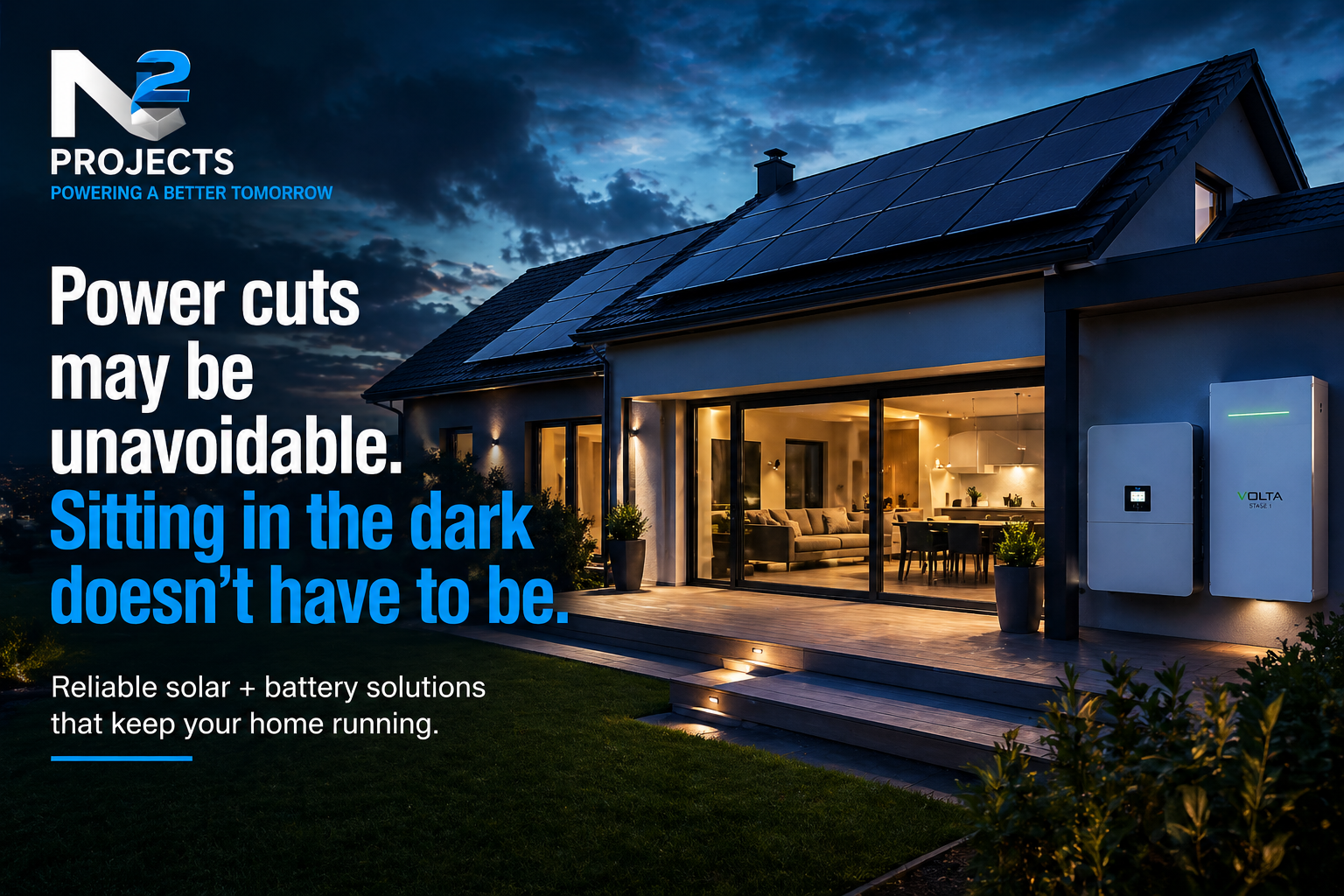

Power cuts have become part of everyday life in South Africa.
Whether it’s scheduled loadshedding or an unexpected outage, most people already know the routine.
The lights go off.
The Wi-Fi drops.
Everything stops.
But it doesn’t have to be that way.

What actually happens when the grid fails?
In a standard home, when Eskom power goes down, everything shuts off immediately. There’s no transition, no backup, no control.
It’s abrupt, inconvenient, and often disruptive—especially if you’re working from home, running a business, or relying on powered security systems.
Now compare that to a home with a properly installed solar and battery system.
How a solar + battery system responds
A well-designed system doesn’t wait for you to react. It handles the situation automatically, in three simple steps:
1. The grid goes off
Eskom supply is interrupted due to loadshedding or a fault.
2. The system switches over
Within milliseconds, the inverter detects the outage and shifts your home onto battery power. If it’s daytime, your solar panels continue generating electricity at the same time.
There’s no need to switch anything manually.
3. Your home keeps running
Essential parts of your home continue to function without interruption.
Lights stay on.
Your fridge keeps running.
Your internet stays connected.
Security systems remain active.
For most people, the experience is simple: everything just carries on.
Why this matters in South Africa
The reality is that power instability is not a short-term issue.
Over the past few years:
- Loadshedding has occurred on most days of the year
- Higher stages can leave homes without power for many hours a day
- Electricity tariffs have increased significantly over time
This has pushed many households and businesses to look for more reliable alternatives.
Solar is no longer just about sustainability. It has become a practical solution to a very real problem.
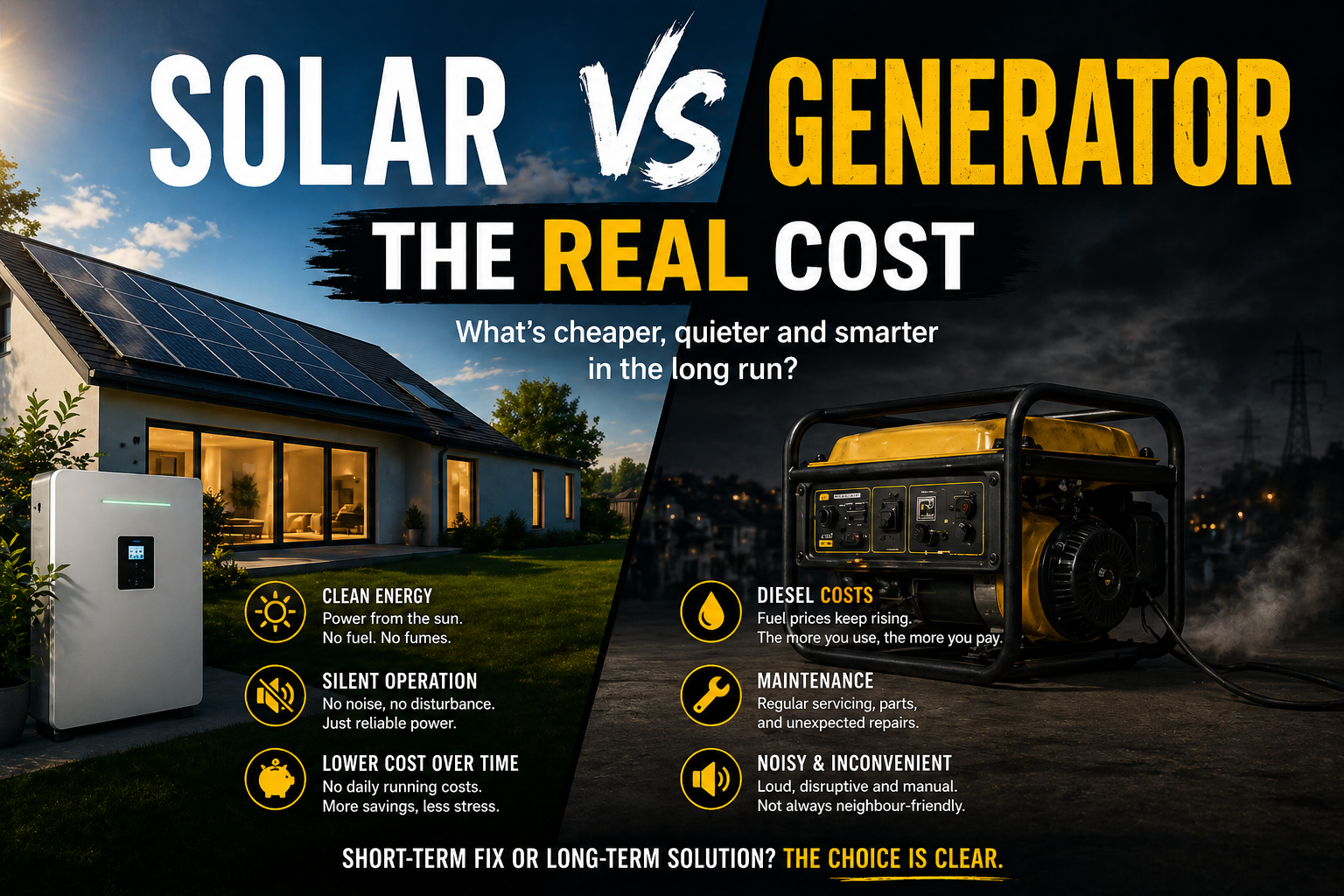
Why not just use a generator?
Generators still have their place, but they come with ongoing costs and inconveniences.
They require fuel.
They make noise.
They need to be started manually.
They require maintenance.
A solar and battery system works differently. It runs quietly, switches automatically, and reduces your reliance on the grid every day—not just during outages.
It’s about more than backup
While backup power is often the starting point, most people quickly realise that solar offers more than that.
It gives you a level of predictability.
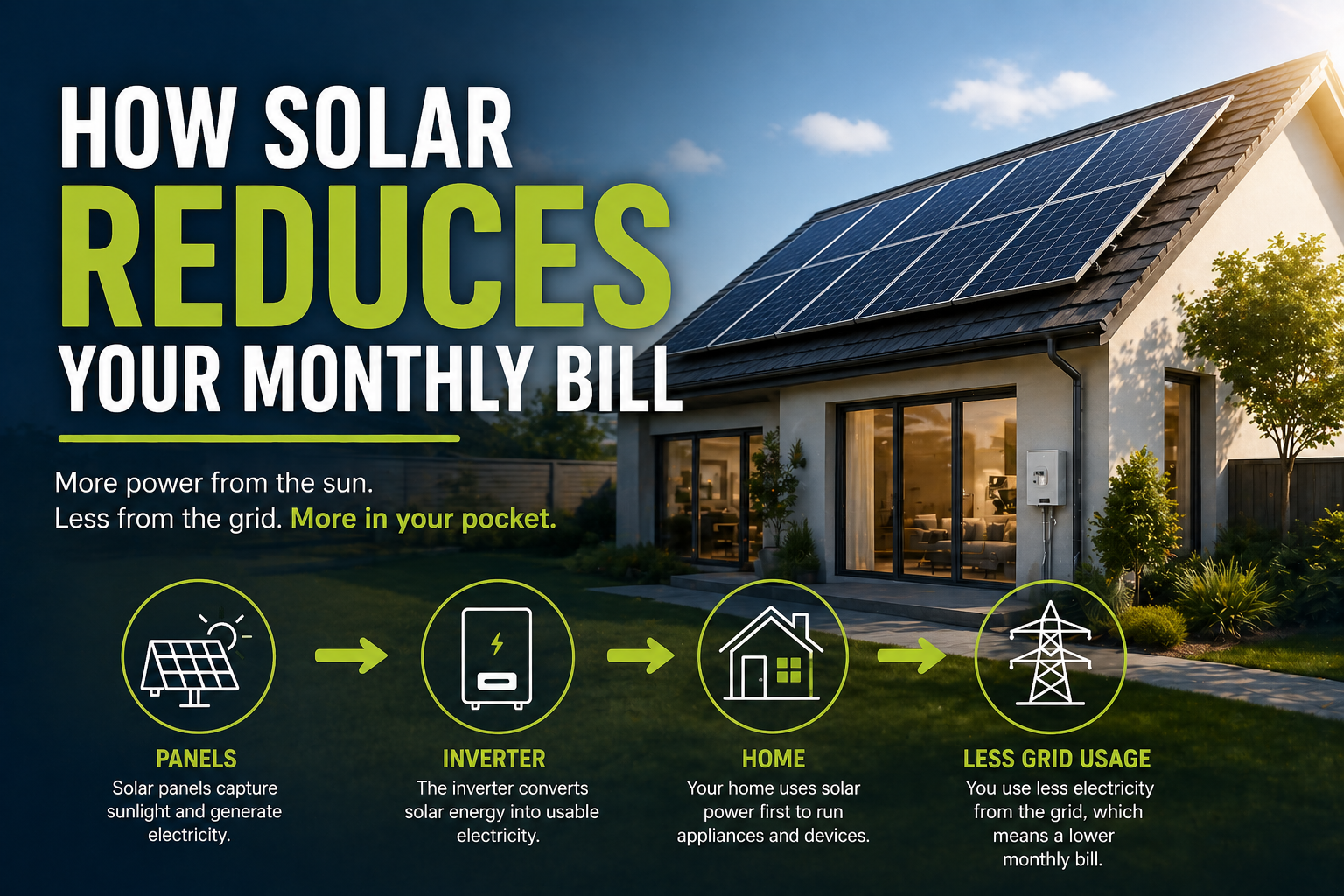
It helps reduce monthly electricity costs.
It allows you to rely less on an unstable supply.
Over time, it shifts your home from being dependent on the grid to being partially self-sufficient.
The importance of proper design
Not all systems perform the same way. The design and installation play a critical role in how well everything works.
A good system is tailored to your actual energy usage. It’s installed neatly and safely, and it’s built to perform consistently over the long term.
That’s why experience matters.
A practical step forward
Most people only seriously consider solar after one too many outages.
But by then, they’ve already experienced the disruption.
The alternative is to plan ahead—so the next time the power goes out, your home doesn’t.
Let’s help you get there
At N2 Projects, we design and install solar systems built for real conditions. The focus is on reliability, clean installation, and long-term performance.
If you’re considering solar, or just want to understand what’s possible for your home or business, you’re welcome to get in touch.
📞 068 648 5240
📧 info@n2projects.com
🌐 n2projects.com
Power cuts may be unavoidable.
Sitting in the dark doesn’t have to be.
Leave a Reply