


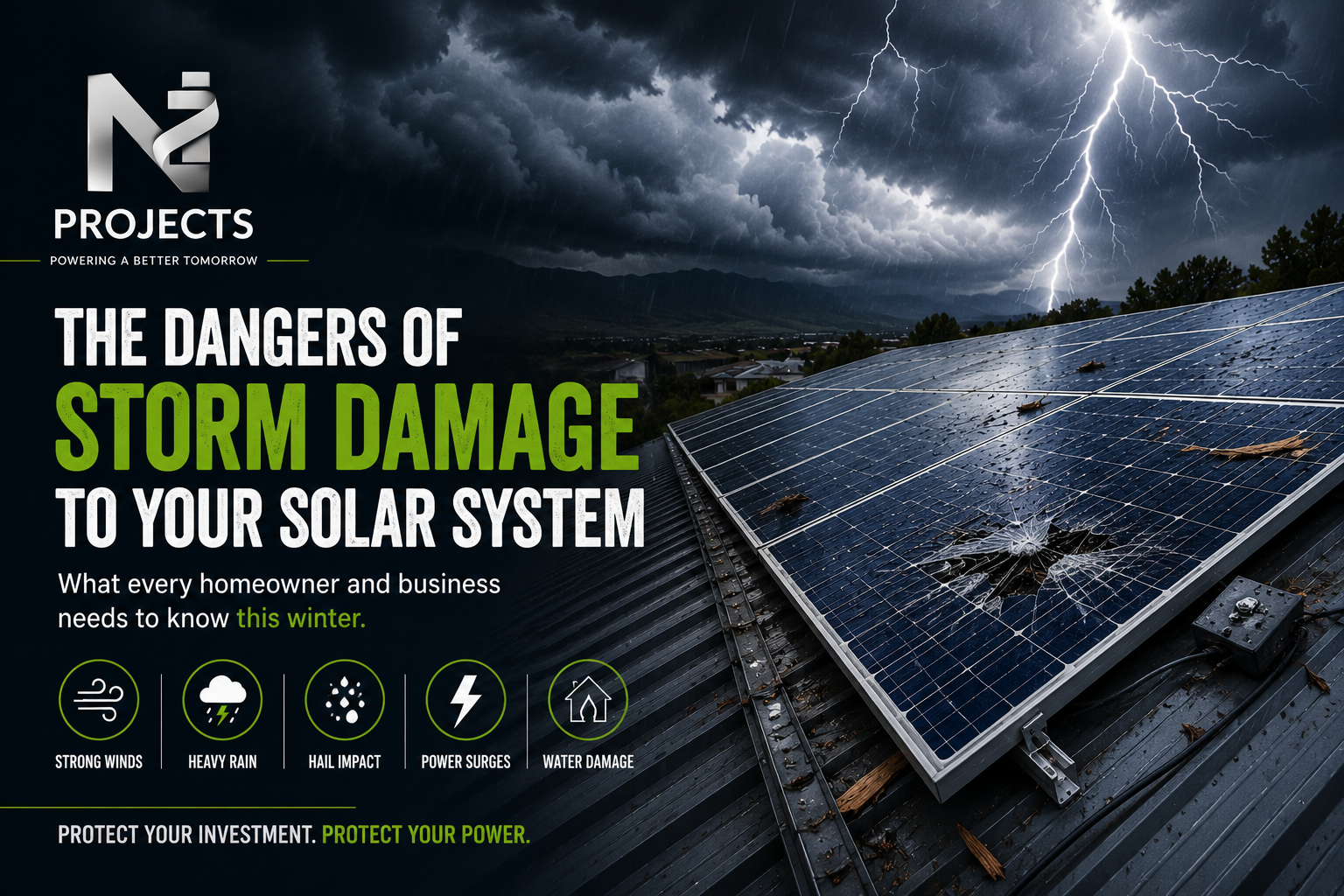


The Western Cape winter has officially arrived. Heavy rain, strong winds, hail, moisture, and sudden temperature changes are all part of the season. While most homeowners focus on leaking roofs or flooded gardens, there is another system taking the full force of the weather every single day:
Your solar system.
Solar systems are designed to handle harsh conditions, but that does not mean they are indestructible. Storm damage often happens quietly. Sometimes there is no dramatic failure, no sparks, no obvious warning signs. Just small issues that slowly grow into expensive problems.
A loose panel bracket.
Water entering an isolator.
A cracked panel corner.
A damaged cable.
A surge that weakens internal electronics.
Weeks later, your system starts underperforming, your battery behaves strangely, or your inverter suddenly fails during the next outage.
And by then, the damage is already done.
Why Storms Are Hard on Solar Systems
Solar panels sit exposed on your roof all year round. During severe weather, they take direct impact from:
- High winds
- Heavy rainfall
- Hail
- Flying debris
- Moisture ingress
- Power surges from lightning or unstable grids
- Rapid temperature changes
Even a professionally installed system can suffer wear over time, especially if mounting structures loosen slightly or waterproof seals begin aging.
In coastal and winelands areas, winter conditions can become especially rough because of:
- Strong seasonal wind gusts
- Salt-heavy air near the coast
- Persistent moisture
- Sudden cold fronts
The problem is that storm damage is not always visible from the ground.
The Most Common Types of Storm Damage
1. Loose or Shifted Panels
Strong winds can place massive pressure on mounting systems. In some cases panels shift slightly, brackets loosen, or rails take strain.
You may not notice it immediately, but movement creates long-term risks:
- Water penetration
- Roof damage
- Cable stress
- Reduced panel efficiency
- Structural failure later on
A rattling panel today can become a detached panel tomorrow.
2. Water Damage and Moisture Ingress
Water is one of the biggest enemies of electrical systems.
Storm conditions can allow moisture into:
- DC isolators
- Junction boxes
- Inverter connections
- Battery cabinets
- Conduits and cable runs
Moisture buildup may cause:
- Corrosion
- Short circuits
- Fault errors
- Electrical arcing
- Complete component failure
Sometimes the damage only appears weeks later after corrosion spreads internally like rust creeping through a ship hull.
3. Lightning and Power Surges
Even indirect lightning strikes can create voltage spikes through the grid.
Sensitive equipment like:
- Inverters
- Batteries
- Monitoring systems
- Communication boards
can all be affected.
In some cases systems continue operating but with hidden electronic damage that shortens lifespan significantly.
4. Cracked Solar Panels
Hail, falling branches, or debris can create microcracks in panels.
These cracks are often difficult to see without inspection, but they reduce performance over time and may allow moisture inside the panel itself.
A panel can look perfectly fine while quietly producing far less power than before.
5. Roof and Mounting Damage
Storm pressure does not only affect the solar equipment.
Incorrectly stressed mounting points can lead to:
- Roof leaks
- Damaged waterproofing
- Cracked tiles
- Bent brackets
- Long-term structural issues
Catching these problems early is far cheaper than waiting for visible interior damage.
The Dangerous Myth: “If The Lights Are Still On, Everything Is Fine”
This is one of the biggest mistakes homeowners make.
A solar system can still produce power while damaged.
That is what makes post-storm inspections so important.
Many issues begin as “small problems”:
- Slight corrosion
- Minor cable strain
- Small panel movement
- Water exposure
- Weak surge damage
Then winter continues hammering the system and suddenly:
- your inverter trips,
- your battery stops charging properly,
- or your backup system fails exactly when you need it most.
Solar systems are investments. Like any major investment, they need maintenance and inspections after severe weather.
Warning Signs You Should Never Ignore
After heavy storms, watch out for:
- New inverter warnings or fault codes
- Reduced solar production
- Battery draining faster than normal
- Flickering backup power
- Strange noises
- Rust or water marks near components
- Loose panels or brackets
- Sudden spikes in electricity bills
Even if everything appears normal, hidden damage may still exist.
Why Professional Inspections Matter
A proper inspection checks far more than visible damage.
At N2 Projects, inspections typically include:
- Panel condition checks
- Mounting and bracket inspections
- Cable and conduit inspections
- Moisture and corrosion checks
- Inverter testing
- Battery inspection
- General safety assessment
- Performance evaluation
The goal is simple:
Catch problems before they become expensive failures.
Winter Is Here. Your Solar System Is Your Power Security.
In South Africa, backup power is no longer a luxury.
It protects:
- homes,
- businesses,
- internet connectivity,
- security systems,
- refrigeration,
- and daily life itself.
A damaged solar system often fails at the worst possible moment:
during an outage, during heavy rain, or during another storm.
That is why preventative inspections matter.
Storm Damage Inspection Special
N2 Projects is currently offering:
Storm Damage Inspections – R500
Available in:
- Greater Helderberg
- Overberg
- Winelands areas
If recent storms have hit your area, now is the perfect time to make sure your system is still safe, secure, and performing properly.
Contact N2 Projects
📞 068 648 5240
📧 info@n2projects.com
🌐 N2 Projects
Your solar system works hard through winter.
A quick inspection today could prevent a major repair tomorrow.
Leave a Reply