
Smarter energy. Stronger futures.
See the power
in your future.
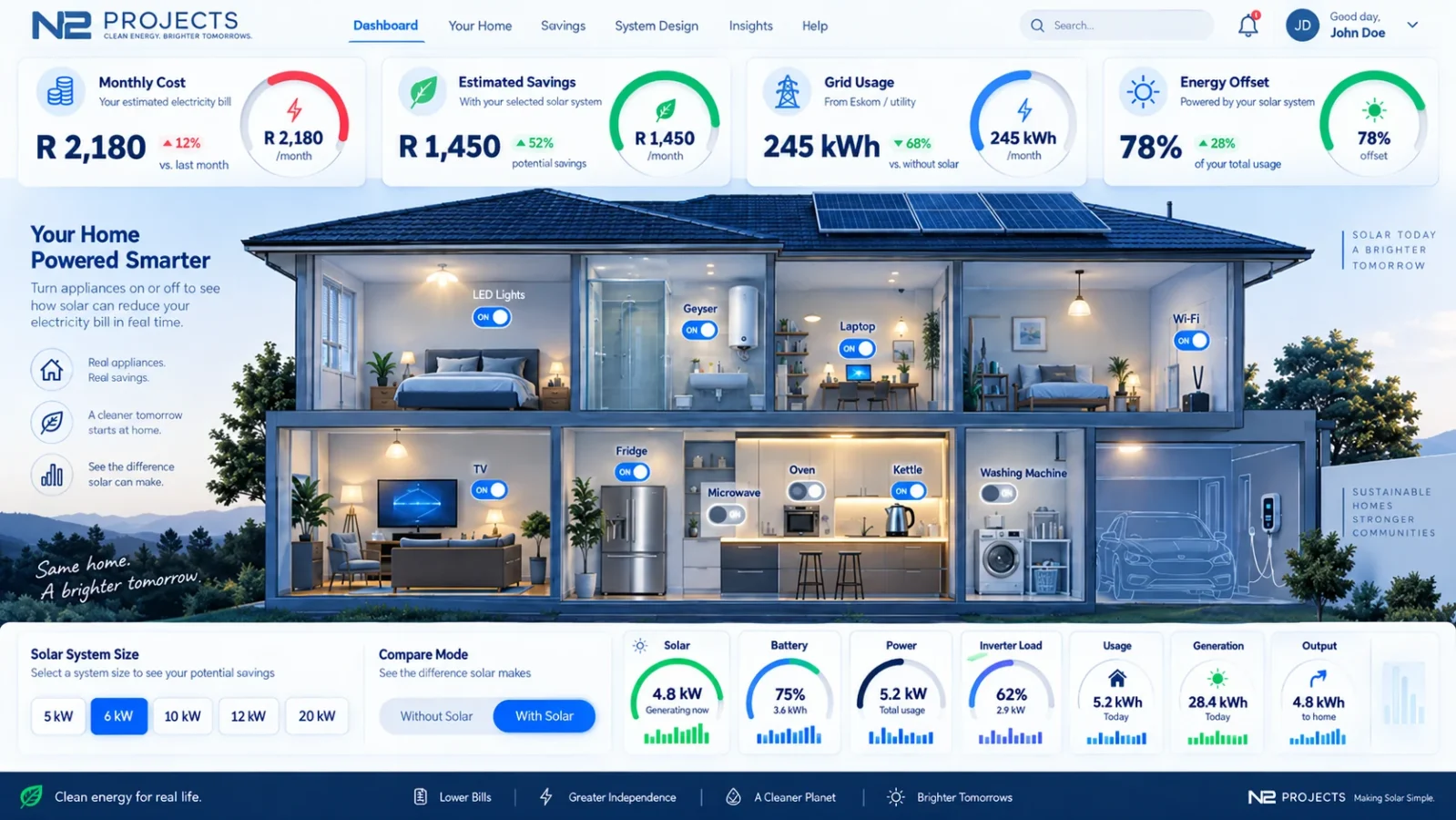
Switch on the appliances you use, compare solar system sizes and see how your estimated electricity bill could change.
Start your estimateSwitch it on. See the impact.
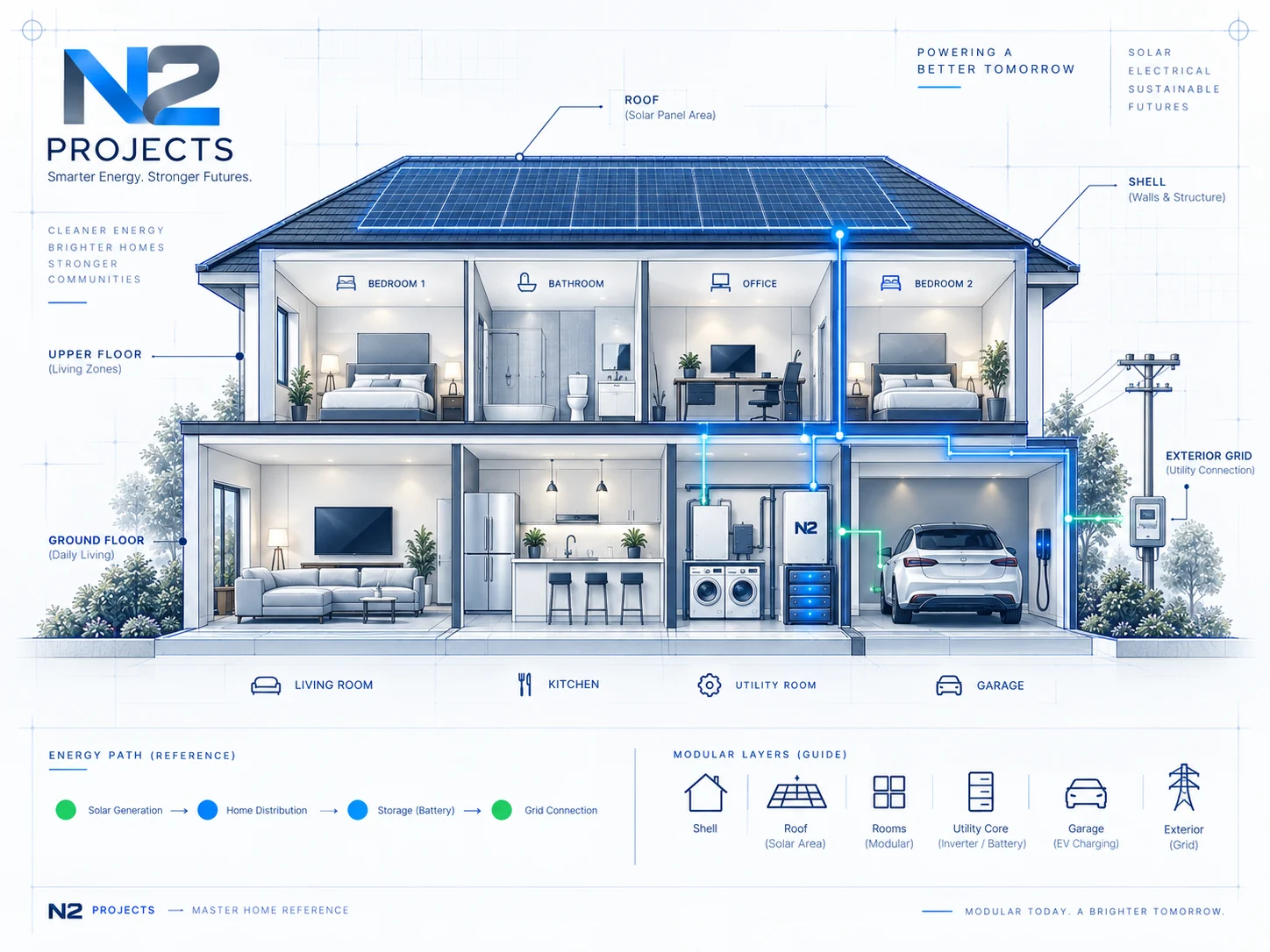
Build your home profile
What do you use each day?
Turn appliances on or off, set quantities and adjust daily use. Every change updates your estimate.
 Smart-energy mode
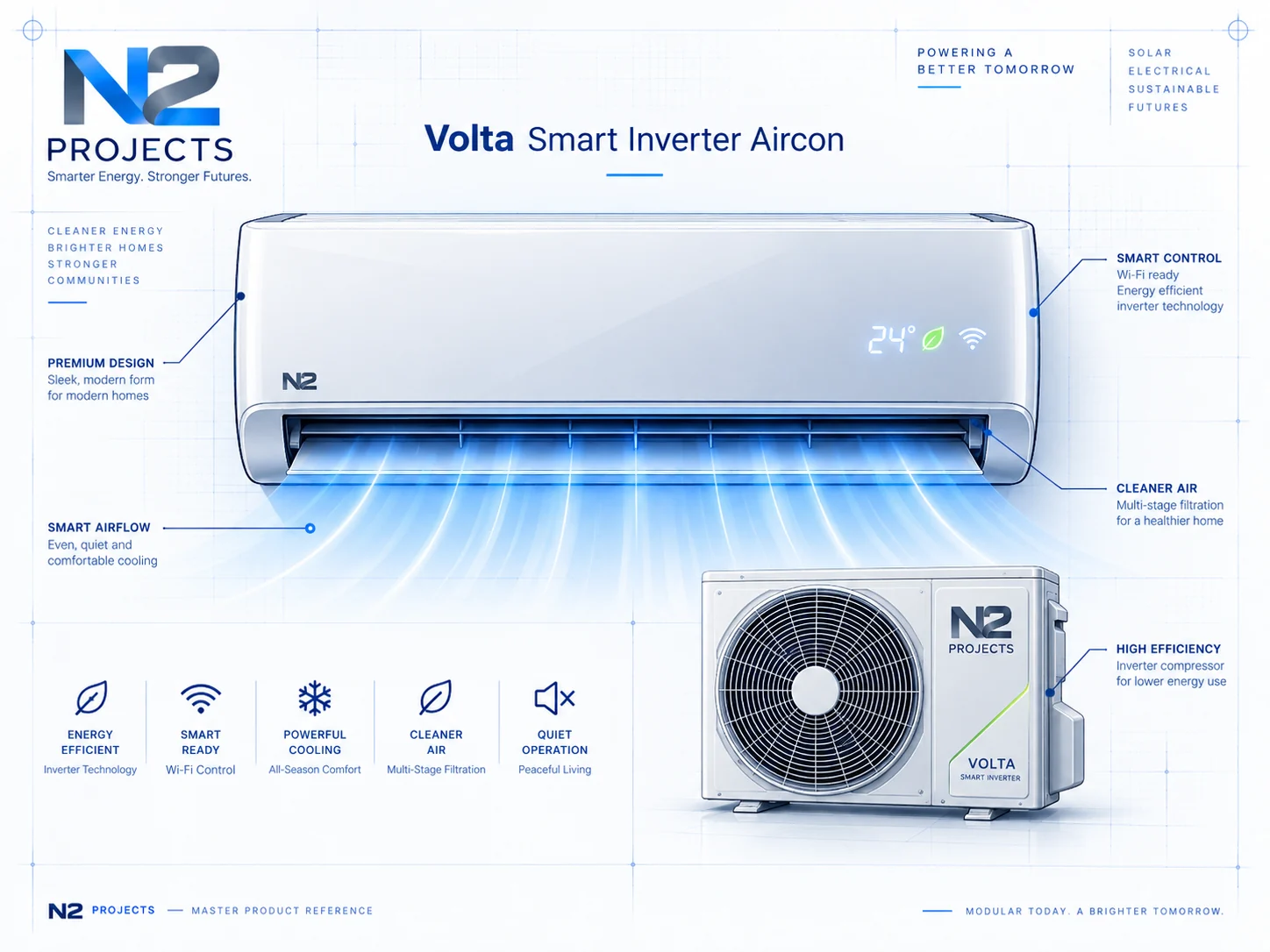
Smarter cooling
Compare your aircon load.
Compare the illustrative aircon assumptions used by this simulator. These estimates are not verified specifications or guaranteed performance for a supplied product.
Add it to backup to see its estimated battery effect.
Want the real numbers?
Turn your estimate into a plan.
Get a professional solar assessment tailored to your home, usage and priorities.
Use the solar simulator as a starting point
This solar simulator helps you explore a household energy-use scenario. Change the appliance use and selected system options, then use the result to prepare questions for a proper assessment. The figures are illustrative, not a quotation or a guaranteed saving.
On this page
Table of Contents
Turn an indicative estimate into a solar assessment
The solar savings simulator is a starting point for discussing household energy use. Its estimates depend on the information entered and the assumptions displayed. They are not a quotation, a guaranteed saving or a substitute for system design.
Actual results depend on your electricity tariff, consumption pattern, essential loads, shading, available roof or ground space, equipment, battery operation and installation conditions. Do not submit private account credentials or identity documents.
Can I use this for a commercial or agricultural project?
Business and agricultural loads, tariffs and operating schedules need a site-specific discussion. Contact our solar team to explain your requirements rather than relying on a household estimate.
What if I already have solar?
Tell us about the equipment and the problem or upgrade you are considering. We can discuss an existing-system assessment, subject to safe access and the available support options.
Request a Solar Assessment or email info@n2projects.com. Our current market is Centurion, Gauteng.
Three questions to ask after using the solar simulator
1. Have I described my everyday electricity use?
Think about a normal day rather than only the appliances you can see. Fridges, lighting, computers, a geyser and other equipment may run at different times. A home office day can look different from a weekend. Choose inputs that reflect the household you want assessed.
A solar simulator cannot check which circuits those appliances use or whether the entered running times are accurate. If you are unsure, tell the team that an input is an estimate. Your actual electricity account and a discussion about your routine can help put the illustration in context.
2. What do I need to keep running during a power interruption?
Choose the essentials you would like to back up and explain why they matter. Keeping lights and an internet connection running is a different requirement from supplying large heating, cooling or pumping loads. Battery size and inverter capability need to be considered together.
More stored energy does not automatically mean every appliance can run at once. The equipment, starting requirements, circuits and system design determine what is practical. These need assessment rather than an assumption based on a single screen value.
3. Which assumptions need checking at my property?
Electricity tariffs, the timing of use, available installation space, shading, equipment choices and actual operating conditions can change the outcome. The solar simulator does not inspect the roof or test an existing installation.
The air-conditioning comparison uses illustrative model assumptions. It is not a verified performance specification for every product bearing a particular brand name. Use actual manufacturer information for the specific equipment being considered.
Understand the basic units
A kilowatt, written kW, describes power at a particular moment. A kilowatt-hour, written kWh, describes an amount of energy used or stored. They answer different questions. An appliance’s power demand, how long it runs and the usable energy available all matter when discussing backup.
Do not compare a momentary number on an app with a whole day’s total as though they were the same measurement. Ask for help interpreting any figures you are unsure about.
Move from an illustration to an assessment
Tell us what you changed in the solar simulator and what you hope to achieve. For an existing installation, include the equipment details and any concerns. Commercial and agricultural use needs a separate discussion because operating hours, loads and supply arrangements can differ from a household.
For background on why sunlight and temperature affect panels, see the Department of Energy’s explanation of photovoltaic performance. It explains general physics, not South African tariffs or a design for your site.
Request a solar assessment in Centurion, Gauteng, or confirm availability for another Gauteng location.